
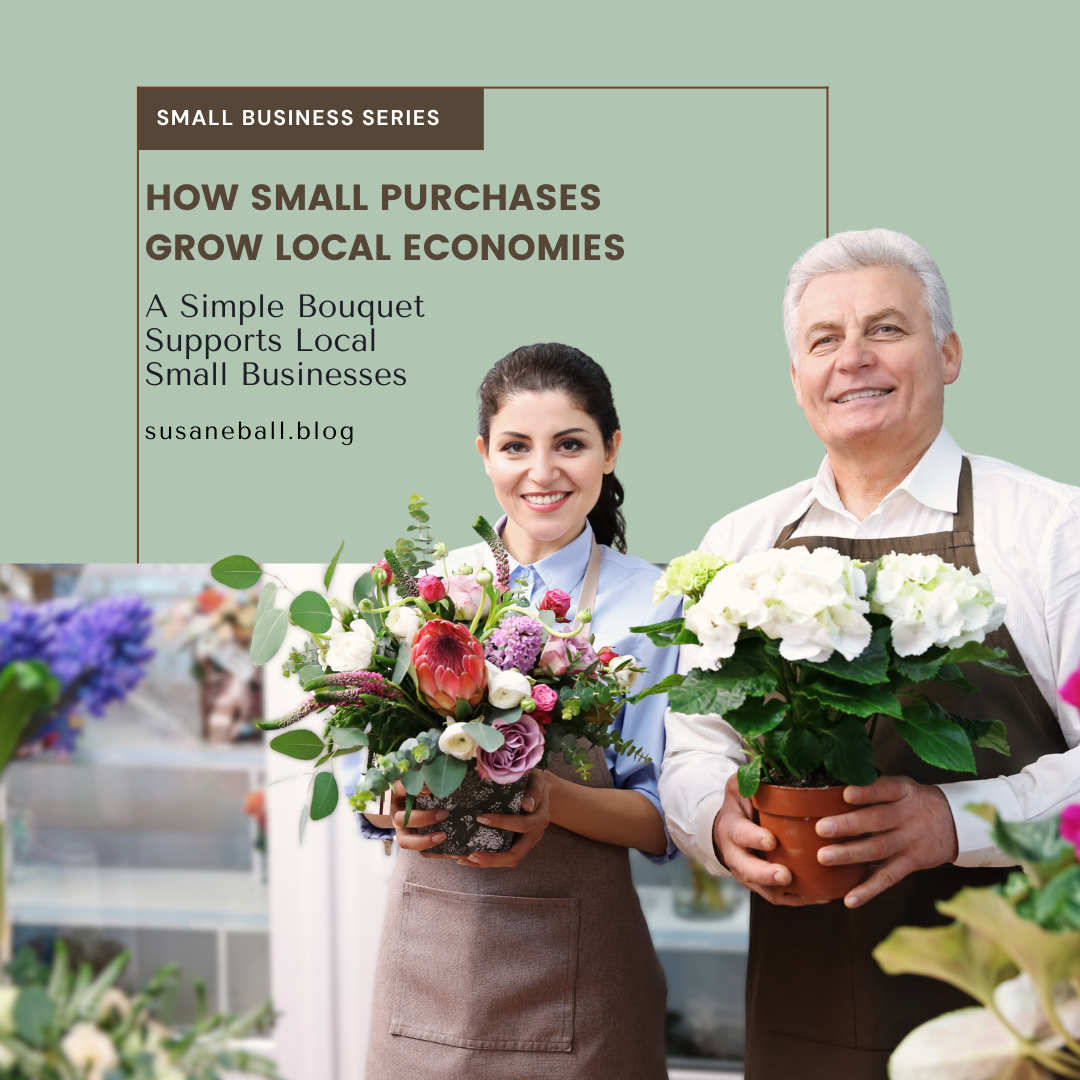
Americans love flowers. We buy fresh flowers and plants to decorate our homes and offices. We give flowers to those we care about to express love, encouragement, sympathy, gratitude, and thanks. Americans spend $71 billion annually on flowers. That works out to $261 per adult per year, although some people spend a great deal more than that.
I read an article this week in which the writer lamented that her boss spends $1,400 per week on fresh flowers for her home. She felt that the expenditure was wasteful. The flowers wilt and are discarded after six or seven days, at which time they are replaced with a new batch.
While some people will agree with the writer, others may wish they had the ability to spend $1,400 per week on flowers. My thoughts, however, were directed toward a different question: How many small business owners profit from this woman’s weekly flower purchases?
When you place an order for fresh flowers from your local florist, you are supporting that small business. The margin above the wholesale cost of the flowers helps the florist pay the costs of operating her shop, including employee wages, rent, utilities, and insurance. But the purchase extends far beyond the florist shop.
The florist purchased the flowers from a grower or, more likely, from a flower wholesaler. The flowers had to be shipped from where they were grown to the retail shop. Each of these steps was accomplished by a business that directly benefited from the final purchase.
There are many businesses involved in the supply chain that starts with a grower planting flower seeds and ends with flowers in a shop, ready for purchase. Each business involved potentially benefits from every purchase made at a local flower shop. Here is a list of businesses that may benefit directly from each sale:
- Florist
- Flower farm
- Seed supplier
- Fertilizer supplier
- Irrigation supplier
- Greenhouse supplier
- Agricultural labor contractor
- Floral wholesaler
- Refrigerated warehouse
- Transportation company
- Fuel station
- Packaging manufacturer
- Ribbon supplier
- Greeting card company
- Credit card processor
- Bank
- POS software provider
- Internet provider
- Commercial landlord
- Utility companies
- Refrigeration maintenance company
- Accountant or bookkeeper
Additionally, many businesses benefit indirectly. The employees of the flower shop use their earnings to meet the needs of their families. They spend money at local grocery stores, restaurants, retail shops, doctors’ offices, and hair salons, just to name a few. This is referred to as the economic multiplier effect.
It is estimated that each dollar spent at a local small business contributes an additional $2–$4 to the local economy.
This spending cycle begins with a customer making a purchase at the flower shop. The florist then uses the money to buy more flowers, pay employees and delivery drivers, and pay other bills such as rent and utilities. This is the first round of the spending cycle.
In the second round, the employees and businesses that were paid by the florist spend the money they received to purchase groceries, buy supplies, and pay their bills.
The process continues as the money distributed in the second round is used by those recipients to pay their bills and reinvest in their businesses. In each round, some money is saved, some is used to pay taxes, and some leaves the local economy.
Thus, the $1,400 spent by the boss on flowers each week helps support economic activity throughout her local community. That weekly purchase doesn’t just benefit the florist. It helps support the growers, suppliers, transportation companies, employees, and other businesses connected to the purchase.
So, the next time you want to purchase flowers for yourself or as a gift for a friend, remember that purchasing from your local florist:
- Sustains the florist.
- Supports a network of growers, wholesalers, truckers, landlords, and service providers.
- Creates income for workers.
- Causes additional spending throughout the community.
One note of caution: Be sure your flower purchases fit into your budget.
But when you have room in your budget, buying flowers from your local florist can do more than brighten someone’s day. It can help brighten the local economy, too.


