
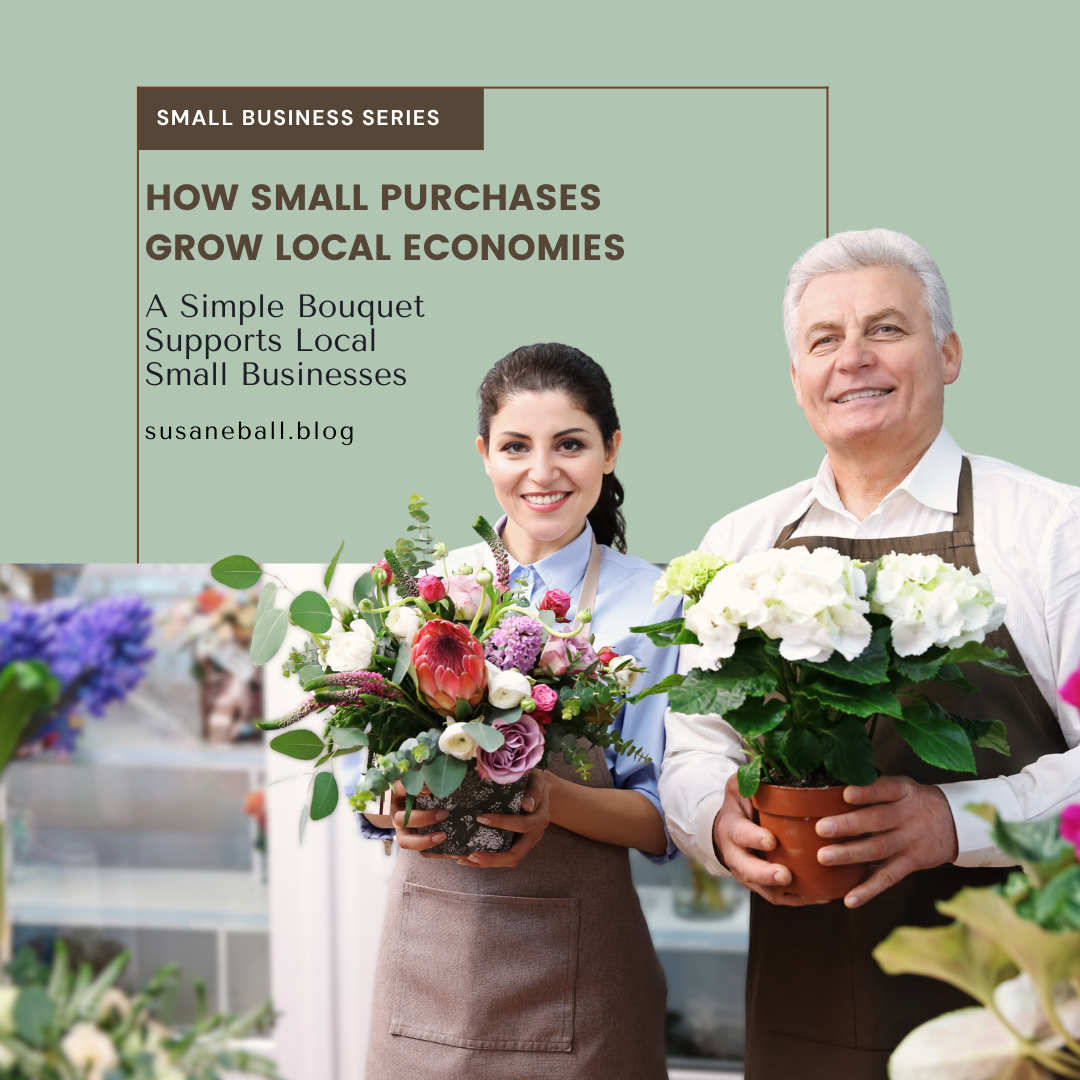
How Small Purchases Grow Local Economies

Americans love flowers. We buy fresh flowers and plants to decorate our homes and offices. We give flowers to those we care about to express love, encouragement, sympathy, gratitude, and thanks. Americans spend $71 billion annually on flowers. That works out to $261 per adult per year, although some people spend a great deal more than that.

I read an article this week in which the writer lamented that her boss spends $1,400 per week on fresh flowers for her home. She felt that the expenditure was wasteful. The flowers wilt and are discarded after six or seven days, at which time they are replaced with a new batch.

While some people will agree with the writer, others may wish they had the ability to spend $1,400 per week on flowers. My thoughts, however, were directed toward a different question: How many small business owners profit from this woman’s weekly flower purchases?

When you place an order for fresh flowers from your local florist, you are supporting that small business. The margin above the wholesale cost of the flowers helps the florist pay the costs of operating her shop, including employee wages, rent, utilities, and insurance. But the purchase extends far beyond the florist shop.

The florist purchased the flowers from a grower or, more likely, from a flower wholesaler. The flowers had to be shipped from where they were grown to the retail shop. Each of these steps was accomplished by a business that directly benefited from the final purchase.

There are many businesses involved in the supply chain that starts with a grower planting flower seeds and ends with flowers in a shop, ready for purchase. Each business involved potentially benefits from every purchase made at a local flower shop. Here is a list of businesses that may benefit directly from each sale:

  1. Florist
  2. Flower farm
  3. Seed supplier
  4. Fertilizer supplier
  5. Irrigation supplier
  6. Greenhouse supplier
  7. Agricultural labor contractor
  8. Floral wholesaler
  9. Refrigerated warehouse
  10. Transportation company
  11. Fuel station
  12. Packaging manufacturer
  13. Ribbon supplier
  14. Greeting card company
  15. Credit card processor
  16. Bank
  17. POS software provider
  18. Internet provider
  19. Commercial landlord
  20. Utility companies
  21. Refrigeration maintenance company
  22. Accountant or bookkeeper

Additionally, many businesses benefit indirectly. The employees of the flower shop use their earnings to meet the needs of their families. They spend money at local grocery stores, restaurants, retail shops, doctors’ offices, and hair salons, just to name a few. This is referred to as the economic multiplier effect.

It is estimated that each dollar spent at a local small business contributes an additional $2–$4 to the local economy.

This spending cycle begins with a customer making a purchase at the flower shop. The florist then uses the money to buy more flowers, pay employees and delivery drivers, and pay other bills such as rent and utilities. This is the first round of the spending cycle.

In the second round, the employees and businesses that were paid by the florist spend the money they received to purchase groceries, buy supplies, and pay their bills.

The process continues as the money distributed in the second round is used by those recipients to pay their bills and reinvest in their businesses. In each round, some money is saved, some is used to pay taxes, and some leaves the local economy.

Thus, the $1,400 spent by the boss on flowers each week helps support economic activity throughout her local community. That weekly purchase doesn’t just benefit the florist. It helps support the growers, suppliers, transportation companies, employees, and other businesses connected to the purchase.

So, the next time you want to purchase flowers for yourself or as a gift for a friend, remember that purchasing from your local florist:

  1. Sustains the florist.
  2. Supports a network of growers, wholesalers, truckers, landlords, and service providers.
  3. Creates income for workers.
  4. Causes additional spending throughout the community.

One note of caution: Be sure your flower purchases fit into your budget.

But when you have room in your budget, buying flowers from your local florist can do more than brighten someone’s day. It can help brighten the local economy, too.

How to Create Buzz for Your New Small Business

Many clients I meet with are launching new businesses. It is important for them to attract attention and make their presence known in order to gain their first customers.

My husband and I opened our pizza restaurant in a busy shopping center in a small town. Our future customers watched with interest as the 7,000-square-foot addition to the shopping center was constructed and divided into four retail units. They peeked through the windows to watch the progress of the interior and tried to estimate how much longer it would be until our restaurant opened for business.

Despite all this attention, we still wanted to make a big splash, so we invested in a marketing blitz. Here are some of the strategies we used.

Join the Chamber of Commerce

Local Chambers of Commerce provide valuable support and connections for small business owners. We attended Chamber meetings and met many local business owners in the months leading up to our opening.

Chamber members are often very supportive of fellow members, and many of them became regular customers of our restaurant.

Hold a Grand Opening Celebration

We worked with our franchise team and the Chamber of Commerce to plan a grand opening celebration and ribbon-cutting event.

We advertised on the local radio station, and the Chamber president, town manager, and a local radio reporter attended the event. The reporter interviewed us, and the interview aired on the radio for several days. We also shared samples of our pepperoni pizza and breadsticks with attendees.

Place Yard Signs Around Town

We purchased inexpensive yard signs and placed them throughout town in the yards of friends and in front of businesses that gave us permission. Yard signs are highly visible to passing drivers and helped increase awareness of our upcoming opening.

Send Out Coupons

Our franchise provided legal-sized coupon sheets that we were required to distribute monthly. About a week before our grand opening, we had thousands of coupon sheets inserted into the local newspaper.

This strategy helped introduce our restaurant to potential customers before we officially opened our doors.

Advertise Locally

Local radio advertising is an affordable way to attract attention from new customers. We began running ads several weeks before our grand opening.

We also placed advertisements in high school basketball programs and local hotel guest information booklets to increase visibility within the community.

Engage the Local Community

We intentionally used local businesses for as much of our build-out as possible, including carpentry, plumbing, and HVAC services. We used a local print shop for our yard signs and employee manuals, purchased office supplies from a nearby stationery store, bought insurance from a local agent, and hired a local accountant to prepare our taxes.

As a result, many of those businesses visited our restaurant when we opened, and many became loyal customers.

We opened our business in 2000—before social media marketing existed in the way it does today. If I were opening a new business now, I would also include these strategies.

Establish an Online Presence Early

Create a website, establish your Google Business profile, and set up your social media platforms before opening day.

I would begin publicizing the business several weeks before the planned opening. Short videos and reels could be used to show the progress of preparing the restaurant, introduce employees, and preview menu items. These types of posts help build anticipation and excitement.

Share News with Friends and Business Contacts

Use email, newsletters, social media, and even traditional mail to announce your new business to friends, family, and professional contacts.

I would include photos of the restaurant, food, and staff, along with links to the website and menu. Coupons and special offers can also help encourage first visits.

Use Content Marketing to Build Interest

YouTube videos and blogs can help educate potential customers about your business, answer frequently asked questions, and share tips or behind-the-scenes content.

A historic building in our town is currently being renovated to resemble its appearance from 50 years ago. The owners are documenting the renovation process on YouTube and sharing stories about the building’s history. Local residents have also shared memories connected to the business. One of those videos has received more than 69,000 views.

This type of storytelling helps people feel emotionally connected to a business before it even opens.

Build Relationships with Complementary Businesses

Partner with businesses that serve the same customer base but do not compete directly with your company.

For example, if you own a lawn care business, you might build referral relationships with power washers, HVAC companies, carpet cleaners, plumbers, or handyman services. All of these businesses serve homeowners and small businesses, making them valuable referral partners.

It is important to promote your business widely in the weeks leading up to your opening. You want excitement and curiosity to build so that when you finally open your doors, customers are eager to walk through them.

What creative ideas have you seen businesses use to promote a grand opening?