
The Peace of God in Our Finances: Letting Go of Financial Anxiety

The third fruit of the Spirit is peace—a deep sense of inner contentment and calm. Peace of mind stands in stark contrast to worry or stress. We experience peace when we feel safe and secure. However, in today’s world, feelings of peace can be rare and short-lived. We find ourselves worrying about our family’s safety and health, job security, political turmoil, and, of course, whether we have enough money to meet our obligations.

Money is consistently one of the top causes of stress. In fact, a recent study revealed that 70% of Americans report feeling stressed about their finances, and 90% say that thinking about money causes them anxiety. But God does not want us to live in fear or anxiety about money. He desires for us to have peace, no matter our financial situation.

True Peace Comes from God

The first step in experiencing peace is recognizing that only God can truly supply all of our needs. As Philippians 4:19 reminds us:
“And my God will meet all your needs according to the riches of his glory in Christ Jesus.”

When we bring our needs before God in prayer, He listens and responds in a way that aligns with what’s best for us. Philippians 4:6-7 encourages us:
“Do not be anxious about anything, but in every situation, by prayer and petition, with thanksgiving, present your requests to God. And the peace of God, which transcends all understanding, will guard your hearts and your minds in Christ Jesus.”

As we bring our needs to God and trust Him to guide us, we begin to experience the true sense of peace that comes from knowing Christ as our Savior and recognizing God as our ultimate provider.

Money Cannot Give Us Peace

It’s also crucial to acknowledge that no amount of money can provide lasting peace. A 2024 study found that the average American household believes they need an annual income of $186,000 to feel financially secure. However, the most recent Census Bureau data shows that the median household income is $78,538, with only 10% of households earning $186,000 or more. This means that the vast majority of Americans feel insecure about their financial situation. It’s no wonder that many experience stress when they think about money.

Even those whose income greatly exceeds $186,000 often admit feeling financially insecure and wishing for “just a little more.” King Solomon understood this idea when he wrote in Ecclesiastes 5:10:
“Whoever loves money never has enough; whoever loves wealth is never satisfied with their income. This too is meaningless.”

True peace comes not from accumulating wealth but from trusting in God, who provides for our needs.

Money Is Fleeting

Even if you have accumulated enough money to feel financially comfortable, it’s important to remember that wealth can be lost in an instant. A stock market crash or economic downturn can wipe out fortunes overnight. Political unrest or war can destroy the wealth of entire nations. Many people have lost their wealth due to bad investments or unscrupulous financial advisors.

King Solomon described this in Proverbs 23:4-5:
“Do not wear yourself out to get rich; do not trust your own cleverness. Cast but a glance at riches, and they are gone, for they will surely sprout wings and fly off into the sky like an eagle.”

Paul also warned against putting our hope in wealth. He wrote to Timothy:
“Command those who are rich in this present world not to be arrogant nor to put their hope in wealth, which is so uncertain, but to put their hope in God, who richly provides us with everything for our enjoyment.” (1 Timothy 6:17)

We can only feel secure and at peace with our finances when we depend on the Lord to provide for our needs. Isaiah 26:3 assures us:
“You will keep him in perfect peace, whose mind is stayed on You, because he trusts in You.”

A Reflective Question for Your Heart

As you consider your relationship with money, ask yourself: Do I place my peace and security in my financial situation, or am I trusting God to provide for my needs, no matter what my bank account looks like? Take a moment to reflect on whether your financial outlook aligns with God’s call to trust Him fully or if you’re still holding on to worry and insecurity. Let this be an opportunity to invite God’s peace into your financial journey.

Are You Stressed about Your Finances?

Many Americans ended 2023 feeling more stressed about their finances than they did at the beginning of the year. Perhaps you are one of them.

According to a survey conducted in mid-December by Allianz Life Insurance Company, Americans cited concerns about rising interest rates, lingering inflation, and debt repayment such as student loans. They listed as their primary financial resolutions for 2024:

  • Creating an emergency fund
  • Paying down credit card debt
  • Increasing deposits to their retirement account

Many Americans reported receiving pay raises in 2023 that did not keep up with inflation. To combat the increased costs of living, one-fourth of all Americans took second jobs or sought other ways to bring in additional income. At the same time, one-third reported cutting their spending to keep financially afloat. For many people, cutting back on spending meant dining out less and doing more meal planning.

Tightening one’s budget and reducing dining out are appropriate responses to financial stress. Seeking additional sources of income is also an appropriate response. The resolutions listed above will not be an option for people in these situations. You can only create an emergency fund, pay down debt, and save for retirement if you can live below your means. If you are in the minority of Americans who feel you ended 2023 in a better financial situation than you began the year, you should prioritize these resolutions. However, if you feel stressed financially, you must take constructive steps to improve your situation.

Your first step should be to examine all your expenses to see what cuts you can make. Reduce all your costs as much as possible without compromising your family’s health and well-being.  Here are some ideas to consider:

  1. Cut gym memberships. Many gym memberships go unused. Even if you use your gym membership, you may want to take a break from it until your budget balances. 
  2. Examine subscriptions, including magazines, tv channels, streaming services, music subscriptions, and personal improvement programs. If they do not truly add value, permanently eliminate them. Otherwise, cut them off temporarily and re-evaluate when your finances improve.
  3. Reduce dining out. You can save significant money if you eat at home and pack lunches for school or work. Planning menus and shopping with a list are the best ways to discourage eating out for convenience. Many social media accounts walk you through plans and menus to help you organize. 
  4. Buy store brands rather than name brands. You may find that you prefer some store brands and stick with them.
  5. Put a moratorium on buying anything new unless it is essential. If you make a purchase, research the best deal and consider purchasing the item second-hand.
  6. Sell unneeded clothing and other items. Many apps allow you to dispose of unneeded items and get immediate cash.
  7. Eliminate unnecessary insurance coverages. Review your insurance policies to ensure you are not paying for coverages that no longer apply to your situation.
  8. Avoid paying others to do tasks that you can do yourself. Can you mow your lawn yourself? Can you drop off your garbage at a convenience site rather than paying for trash pickup? 
  9. Lower utilities bills. Reduce your electric bill by turning off lights in rooms you are not in and adjusting your thermostat so the heat or AC is not running as much. Cut your water bill by taking shorter showers and only running the dishwasher when it is full. Open curtains in the winter to warm up your space and close them in the summer to cool off your house.
  10. Reduce communication bills. Cell phones and the internet consume a significant portion of most families’ budgets. Examine your plans and determine if you are paying for more time and speed than you need. If you work from home and need higher service levels to do your job, ask your boss to cover some of those expenses.

Your second step is to find ways to increase your income. For many, this has meant taking on a second job or joining the gig economy. I know several people delivering groceries, meals, or products to make ends meet. Many opportunities are available through companies such as DoorDash, UberEats, Instacart, and Amazon Flex, allowing you to earn a bit of extra money in your free time.

Whatever steps you take to help put your family in a better financial position, remember that you need to create a budget, and everyone in your family needs to have input into developing your budget. Also, be sure to go to God with your problems. Ask God to help you make wise financial decisions to provide for your family. God cares for you and wants you to take care of your family. Jesus illustrated God’s care for you in the Sermon on the Mount. “Therefore, I say to you, do not worry about your life, what you will eat or what you will drink; nor about your body, what you will put on. Is not life more than food and the body more than clothing? Look at the birds of the air, for they neither sow nor reap nor gather into barns; yet your heavenly Father feeds them. Are you not of more value than they? Which of you by worrying can add one cubit to his stature?’ Matthew 6: 25 – 27 

If you have other suggestions for reducing expenses, please share them in the comment section.

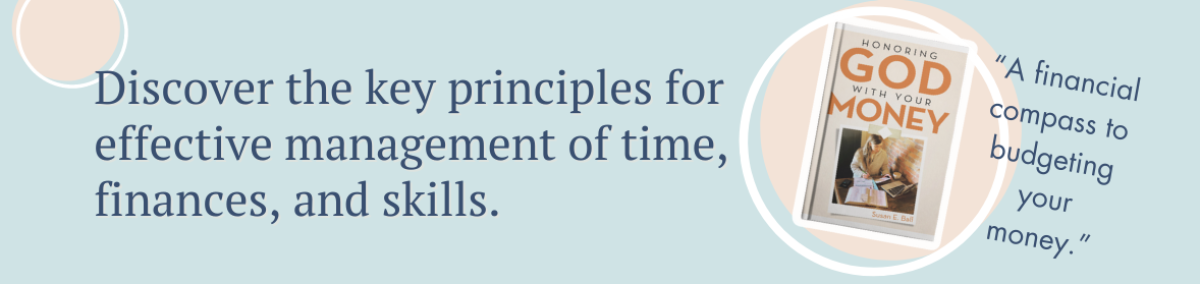
Please read my other blog posts for more ways to manage your money and reduce stress. My book, Honoring God with Your Money, is another valuable resource to help you manage your money.

Falling Behind on Your Bills?

If you notice that it is harder to pay your bills lately, you are not alone. The prices of goods and services purchased by the average family have risen by more than $709 a month over the past two years, according to Moody’s Analytics. The higher cost of living stresses family budgets, especially since incomes have not kept up. The Census Bureau announced this week that inflation-adjusted wages fell in 2022 for the third year in a row. As prices are rising, your spending power is declining.

Are you falling behind on your bills?  These tips will help you stretch your dollar.

As a financial adviser, now is a good time to re-evaluate your budget and change your discretionary spending before you end up in debt or fall deeper into debt. 

The Washington Post reported last month that the delinquency rate for credit card payments has risen to the highest rate in over a decade. Over the past few years, consumers’ credit card usage has increased significantly. Since 2019, more than 70 million new credit card accounts have been opened, and total credit card debt has topped $1 trillion for the first time.

If you need ideas on making your dollar stretch further, here are some tips to help you manage your money in these tough economic times. 

  • Be intentional with your spending and giving. Adjust your budget for your current spending levels for food, utilities, and other necessities. Then, plan giving and discretionary spending to fit within your budget.
  • Consider cutting back on retirement savings and investments until you are better financially.
  • Look for “extra” sources of cash.  If you got a large tax refund this year, you can access that money now by reducing your payroll withholdings.  
  • Evaluate your car insurance plan and see if you can cut out some coverages or find a less expensive plan; for example, you might have duplicate benefits if you have a medical insurance plan.
  • Reduce your cable bill by eliminating one or more premium channels.
  • Fast one purchase category for a month, such as specialty coffee beverages, massages, new shoes, clothes, or lunches out. Each month, forgo a different spending category. This system allows you to save money without giving up “luxuries” for an extended time.
  • Earn some extra money on Fiverr, Freelance, or Upwork. These freelance job sites provide a way for you to use your talents to earn money when you have a bit of free time.

It is never fun to tighten one’s belt; however, making necessary changes is preferable to running up large credit card balances and feeling stressed due to the inability to meet your obligations.  

As you consider these options, ask God for guidance. He promises wisdom to those who ask Him. “If any of you lacks wisdom, let him ask of God, who gives to all liberally and without reproach, and it will be given to him.”  James 1:5

My book Honoring God with Your Money offers guidance to help you manage your money according to biblical principles.  

Hope is Not a Plan

As a Christian, my hope is in the Lord, who holds my life in His hands. As a writer, I hope people buy my books and read my blogs. As the owner of short-term rental property, I hope that vacationers decide to stay at my home. But, as a small business consultant, I share with my clients the mantra, “Hope is not a plan.”

Hope is essential to taking risks and moving forward with new opportunities in your life. However, hope does not bring me readers or renters. I must take action to inform potential readers of my books and blogs and potential renters of my property. Those actions involve effort, such as marketing, advertising, and asking for reviews.

If you are trying to achieve a financial goal, hope will not help you to accomplish your goal. You need to have a plan:

  • If you want to purchase a new home or car, you need a plan to accumulate the down payment.
  • If you want to get out of debt, you need a plan to start paying off one debt while meeting the minimum obligations on your other debts.
  • If you would like to retire early, you need to start putting money into a retirement account at an early age and be consistent in making contributions.
  • If you want to improve your credit score, you need to obtain your credit report and assess what debts need to be paid off, what errors need to be corrected, and what steps you can take to reduce your total amount of debt.
  • If you want to start your own business, you must maintain a high credit score and set aside money to invest in your business.
  • If you want to start budgeting, you need to research and evaluate budgeting tools to determine which one you will actually use.

Key Factors of a Plan to Accomplish a Financial Goal:

  1. Live below your means. If you want to save money for any reason, or if you’re going to pay down debt, you must spend less than you make. This requires you to know what you spend and evaluate where to make cuts.
  2. Write down your goals. Studies show that writing down your goals significantly increases your chances of achieving them.
  3. Have an accountability partner. If you are married, you and your spouse should hold each other mutually accountable. If you are unmarried, ask a friend to be your accountability partner. Hold each other accountable by encouraging each other and reminding yourselves that money spent cannot be used to meet your goal.
  4. Celebrate milestones. Give yourself a pat on the back when you hit an intermediate milestone, such as paying off a debt or saving a certain amount of money. Milestone celebrations should be free or low-cost to keep you on track to achieve your goal.
  5. Make it easy to save. Set up payroll deductions for retirement or other savings so you never have access to the money. Download a budgeting tool that makes it easy for you to track your spending. Avoid “window shopping,” which increases your desire for items you do not really need.
  6. Keep your goal in front of you. Have a picture of your dream home or car on your refrigerator. Write your business plan and look around for possible locations. Develop a bucket list of all the fun things you will do in retirement.
  7. Evaluate your progress periodically, and if you have gotten off track, take action to correct your mistakes and get back on the right track.

Your plan does not have to be complicated to be effective. Start dreaming, set a goal, and develop a plan to reach that goal.

Setting and achieving financial goals helps you honor God in how you use and manage the financial resources He has entrusted to you. It also allows you to build treasure in Heaven. For more tips to help you manage your financial resources, please see my other blogs in the Finance tab. My book, Honoring God with Your Money, is full of guidelines to help you use money in a way that builds true wealth.

If you have never accepted Christ as your Savior, please consider accepting the free gift of salvation from your sins and eternal life in Heaven. It will pay dividends for all of eternity.

Minimizing the Costs of Credit Card Balances

Americans have a love affair with credit cards. They make life easier while also making it easier to overspend. Studies reveal that a purchaser will spend an average of 20% more on an item when using a credit card than when paying with cash.

Person using a laptop computer and holding a credit card.  Title is "Minimizing the Costs of Credit Card Balances."

Credit card usage peaked in the fourth quarter of 2008, as the nation entered a severe recession, with balances reaching a then-high of $866 billion. Credit card balances fell significantly over the next 5 years. As the economy recovered, however, the use of credit cards and credit card balances began to rise. Today, credit card balances are approaching the $1 trillion level. The average consumer carries a credit card balance of $7,279 (Lendingtree.com). Fifty-three percent of credit cards being actively used are not paid off in full each month. The average interest rate of these balances is 20.92%, and the average interest rate being offered to new borrowers is 23.65%. 

The good news is that most Americans make regular credit card payments, and only 2.25% of credit card balances are delinquent by 30 days or more.

The minimum credit card payment is typically about 2% of the balance. On the average balance of $7,279, the minimum payment would be $86. At that payment and an interest rate of 20.92%, it would take a borrower 28 years and 3 months to pay off the debt. The total interest paid would be $27,776. In this scenario, the $7,279 in debt would cost the borrower $35,055.

When a consumer (that’s you) begins to take an active role in their financial future, they can minimize the interest on credit card balances. Remember, interest is handing part of your hard-earned paycheck to someone loaning you money. If you are not paying off your credit card each month, you need to determine why you carry a balance. 

The steps below can help you make advances on getting a handle on your credit card debt: 

  1. Always pay at least the minimum balance on time.
  2. Set up automatic payments to ensure that payments are always made on time.
  3. Pay more than the minimum balance whenever possible.
  4. Consider the actual cost of debt before making large purchases on credit cards.
  5. If your balances are on multiple credit cards, prioritize paying off the card with the highest interest rate first.
  6. Live below your means so that you will have some money each month to put toward your credit card balances.
  7. Create a budget to live within your means. (Refer to my past posts on budgeting) 

To learn more about how to manage your money and pay off debt, please click the Finances categories tab to find many blogs on money management, budgeting, and stewardship. My book Honoring God with Your Money is a great tool for financial money management.

If you would like to receive my quarterly newsletter on managing your money, please complete the short form: newsletter signup.

9 Tips for Sticking to Your Budget

A few weeks ago, I shared tips on developing a personalized budget that works for you and your family. You can find that blog by clicking the following link. https://susaneball.blog/2023/03/30/how-to-create-a-personalized-budget-one-size-does-not-fit-all/

A reader wanted me to share some ideas on how to keep on track and stick with a budget. Often we desire to manage our finances and enthusiastically start the steps to wrangle in our spending but quickly lose the motivation and discipline. So, this post focuses on motivating yourself to follow the budget you developed to manage your finances better and achieve your goals.

What is Your Goal?

You should take the time to determine your goal(s). Simply saying that you want to save money is typically not incentive enough to save money. It is nebulous, and you will find that you can justify overspending when you have not determined a marker of how much to save and a date to accomplish this goal.   Setting specific financial objectives and developing a budget will take you one step closer to achieving success. Your plan will motivate you because every good spending decision brings you one step closer to your dream. Your goal should be unique to your life, and you might have multiple ones that you are working on simultaneously. If you have not thought about your financial plan(s), below is a list of some common ones:

  1. Pay off debt(s). 
  2. Reduce stress.
  3. Improve your credit.
  4. Save for a memorable vacation.
  5. Save a down payment for a house.
  6. Save for a new(er) car.
  7. Retire early.
  8. Invest in your retirement fund.
  9. Save for your children’s college expenses.
  10. Start your own business.

Keep Your Goal in Front of You

When my husband and I decided to buy a pizza franchise business, we knew we had to save money to invest in our company. We cut back on discretionary expenses, such as dining out. When we were tempted to go out to eat, we reminded each other that the money we saved by eating at home helped us to achieve our dream. To maintain our excitement about our future business venture, we worked on our business plan and discussed our business goals daily. We also sold possessions not needed in our new life so we could add to our investment fund. Sticking to our minimized budget and saving money was easy because we were excited about our new venture.

Celebrate Goal Milestones

Try to set intermediate goals and celebrate reaching them. It takes a long time to achieve many financial goals, such as paying off a large credit card debt or accumulating a down payment to purchase a home. The average home price is about $350,000, and the lender typically requires 6% as a down payment from the buyer. That means you will need to save $21,000 for the down payment. If you save $1,000 per month, it will take you nearly two years to put aside the down payment. To keep yourself from getting frustrated, set mid-goal milestones, such as saving multiples of $3,000, and celebrate hitting those marks. Your celebration needs to be modest and within your budget, such as having a reasonably-price dinner at a restaurant or purchasing an accessory for your future home. Also, you might make a chart to record your progress if you are visually motivated.

Focus Your Spending Attention on Discretionary Spending

Your mortgage or rent payment, car payment, and insurance premiums are set amounts each month. In the short run, you cannot change them. Of course, they are a significant portion of your budget and must be considered. However, it would be best to focus on areas of your budget where you have more flexibility. Consider saving money on utilities, telephone and internet services, food, clothes, recreation, and other miscellaneous spending.

Use a Bill Paying System to Make Bill Paying Easy

I have scheduled each regularly occurring, fixed payment bill to be paid using our bank’s bill-paying service. This system is great for paying the mortgage, HOA fee, car payment, and insurance premiums. Utility bills and other expenses that vary from month to month are delivered directly to the bank, making it fast and easy to pay them.

Set Regularly Times Each Week to Pay Bills

Setting a regular time to pay bills and balance your checkbook will reduce your financial stress. You can put bills out of your mind until it is time to deal with them. I balance my checkbook each Sunday morning before we go to church. Our church service starts later than a typical workday, and our Sunday morning routine is less hectic than our Saturday mornings. After breakfast, I pour a second cup of coffee and settle at the computer. It only takes a few minutes since there are only one week’s bills to pay and cleared checks to reconcile. 

Set Up Automatic Transfers to Savings

Once you have established your budget, you need one additional category added to your automatic transfers. This new category should be your savings. Once you determine that amount, set up an automatic transfer on the first of each month or the first payday. This is one less decision you must consider, and you are unlikely to be tempted to pull the money out of savings once it is there.

Make It a Family Effort

If you are married, it is important that you and your spouse work together to set your goals and achieve them.  If you have children, share your goal with them and build excitement.  This is a great learning opportunity for them, and will help them to understand why you are saying “No” to certain items they want you to purchase.  Set aside a time once a week or twice a month to assess where you are and hold yourselves accountable to one another.   As intermediate goals are met, have a family vote to decide on the reward, or take turns choosing the reward.

Recruit an Accountability Partner

If you are not married, you will want to recruit someone that you can review your spending with once or twice a month and who will encourage you to stick with your plan. Be careful not to sabotage your budget by asking your shopping buddy to be your accountability partner.  Perhaps you have a mentor at your work or church, or a parent, who has consistently demonstrated financial responsibility who would be willing to assist you.  Having an accountability partner greatly increases your chances of being successful in reaching your goal.

In summary, set goals, reward yourself for reaching your intermediate and long-term goals, and set up systems to make it easy to pay bills and live within your budget. The easier it is to monitor your spending, the more successful you will be in sticking with your budget.

To learn more about how to manage your money, please click the Finances categories tab to find many blogs on money management, budgeting, and stewardship. My book Honoring God with Your Money is a great tool for financial money management.

Proverbs 31 and the Ten Commandments of Thrifty Living

The Christmas season is a time for being generous and gathering with family and friends.  However, after the holidays are over, many people find themselves saddled with significant debt accrued by giving gifts and throwing parties that went beyond their budgets.  Even as we seek to be generous and shower affection on our loved ones, we must remember that the true spirit of Christmas is celebrating the birth of Christ and sharing God’s love with those around us.  Being generous and sharing with others does not require one to go into debt.  It does, however, require some time, effort, and planning.

Today I am sharing some ways you  “Applying Proverbs 31 to the Ten Commandments of Thrifty Living”.  The ‘commandments’ in bold were created by the author of this list–I found it many years ago and I no longer have any idea who authored it.   The Scriptures were included in the list and are from the New International Version. The application of these principles are my own ideas.  I believe these principles are still valid, and if you apply them to your holiday planning and spending, you will be able to have a meaningful Christmas celebration while staying within your budget.  

Applying Proverbs 31 to the Ten Commandments of Thrifty Living

1) Roll up your sleeves.  “She sets about her work vigorously; her arms are strong for her tasks.”   Proverbs 31:17

Convenience items can save time but cost more.  Sometime the trade off is worth it as the time saved may be more valuable than the money spent.  Be wise in choosing convenience items that give you a good value for your money and do truly save time.  Likewise, paying others to things you are able to do will save you time but cost you money.  Make wise decisions about what taks you should do yourself and what tasks are worth paying someone to do for you.

2) Organize your world.  “She watches over the affairs of her household and does not eat the bread of idleness.”  Proverbs 31:27

Organization helps you save time and money.  Organize shopping trips to accomplish multiple tasks while out to save gas and time.  Organize online shopping to ensure that you get free shipping and don’t have to pay rush delivery charges to get gifts delivered by Christmas.  To get ahead for next year, organize holiday decorations and leftover gift wrap and cards so they can be stored properly and be found easily next year.

3)  Provide for each day’s need.  “She gets up while it is still dark; she provides food for her family.”  Proverbs 31:15

Caring for your family should be your first priority.  Don’t let the business of the holidays interfere with taking care of the day-to-day needs of your family.  It easy to get so busy that we end of eating out a lot and making multiple trips to the store for groceries and other necessities, both of which can wreck havoc with your budget.

4) Waste not; share your excess.  “She opens her arms to the poor and extends her hands to the needy.”  Proverbs 31:20

The holidays are a good time to clean out closets and give away items no longer needed.  They are also a good time to share generously with others what God has given to you.  I set aside a portion of my Christmas budget each year to buy new gifts for one or more children whose families need a bit of help. There are many, many ways you get share with others in deed.  A few ideas are:  donate unwanted items to Goodwill or similar organizations, buy new toys and clothing for children in need and donate through the Salvation Army, and pack a shoebox with small gifts to be donated to children in improvished countries through Samaritan’s Purse.

5) Discover your creative genius.  “She speaks with wisdom, and faithful instruction is on her tongue.”  Proverbs 31:26

God has endued each one of us with creativity, although we each express it differently.  Pray and seek God’s direction in using the creative gifts He has given you to bless others.  I enjoy knitting and knit Christmas stockings as gifts.  I have friends who bless others with homemade jams, jellies, and baked goods.  If decorating is your talent, your gift to a friend could be to help her decorate her home.  Handmade gifts can save money but do require an investment of time, so plan ahead and be organized.

6) Learn prices.  “She sees her trade is profitable, and her lamp does not go out at night.”  Proverbs 31:18

Don’t fall for ads declaring that something is marked down 50% or more.  Many stores mark prices up before the holidays to give the illusion that you are saving more money than you really are.  The Internet and phone apps make comparison shopping easier than ever.  Check prices on the items you need before you go out shopping.

7) Presentation is everything.  “She makes coverings for her bed; she is clothed in fine linen and purple.”  Proverbs 31:22

You can make even simple meals special by using nice dishes and decorating the table to be festive.  You can make your home welcoming and inviting by adding inexpensive decorations, such as lights and tinsels, to your entrance. Simple, inexpensive embellishments can dress up your presents. Presentation does not have to be expensive to add a nice touch to your home and gifts.

8) Adjust your attitude.  “She is clothed with strength and dignity; she can laugh at the days to come.”  Proverbs 31:25

Don’t let the holidays cause you to become overwhelmed and stressed.  If you get too concerned about buying everyone the perfect gift or creating the perfect holiday, you will wind up not enjoying the holidays.There is no such thing as a perfect holiday, anyway.  Remember Christmas is a celebration of the birth of Christ and a time to spend with friends and family. Keep your focus on Christ and you will have a more satisfying holiday.

9) Out with impulse.  “She considers a field and buys it; out of her earnings she plants a vineyard.”  Proverbs 31:16

Plan your shopping before you leave the house.  Know how much you plan to spend on each family member and stick to your budget.  Impulse shopping leads to overspending and often to being less satisfied with your purchases than planning ahead and sticking to your plans.

10) Honor God.  “Charm is deceptive, and beauty is fleeting but a woman who fears the Lord is to be praised.”  Proverbs 31:30

Everything we do should honor God. When our focus is on God and celebrating the birth of His Son, our celebrations will truly be meaningful and enjoyable.

Honoring God With Our Money: Rules of Investing

If you have created a budget and are following it, eventually you will wind up with more in savings than you need for an emergency fund.  At that point, you should think and pray about investing your excess money to meet future needs.  The following rules of investing are adapted from Larry Burkett’s book, Family Budgets That Work.

investor

Rules of Investing:

  1.  Never invest money you cannot afford to lose.  All investments have an element of risk and the possibility exist that you might lose all or a portion of the money you have invested.  One only has to look at the variability in the stock market to see that this is true.
  2. Never get involved with things you don’t understand.  Don’t try to buy individual stocks unless you know the company well and have confidence that it is well-run.
  3. Demand sufficient information to thoroughly evaluate the opportunity.  Take the time to thoroughly research possible investments.
  4. Seek good, non-involved Christian counsel.  There are many knowledgeable Christian financial counselors who will discuss your needs and goals and help you to make wise investment decisions.
    • Proverbs 19:20  Listen to advice and accept discipline, and at the end you will be counted among the wise.
  5.  Set a minimum time to pray and seek God’s direction.  Don’t let anyone rush you into an investment decision.  If the opportunity is only available for a limited time, it is probably an opportunity you should forgo.
  6.   Once you have God’s direction, write out an investment plan.  A written plan will help you keep your goals in mind and help you make investment decisions that are consistent with your goals.
    • Proverbs 20:5 The purposes of a person’s heart are deep waters, but one who has insight draws them out.
  7. Avoid ‘get rich’ schemes.  Plan for slow, steady growth.  If it sounds too good to be true, then it almost always is.
    • Proverbs 21:5 The plans of the diligent lead to profit as surely as haste leads to poverty.
    • Proverbs 28:20 – 22  A faithful person will be richly blessed, but one eager to get rich will not go unpunished.   To show partiality is not good—yet a person will do wrong for a piece of bread. The stingy are eager to get rich and are unaware that poverty awaits them.

Honoring God With Our Money: Savings Plan

Most financial experts recommend that everyone should make a regular habit of saving 5% of their income.   A goal for savings should be to accumulate enough savings to cover 3 -6 months of living expenses as a cushion for periods of unemployment due to layoffs and extended illness.

For those who are struggling financially and are unable to meet current expenses, savings is not an option at present.  Everyone else should make a goal to save at least a small amount out of each paycheck and to increase that amount as circumstances allow. 

Getting into the savings habit can be difficult, so I offer the following steps to assist in getting started on a regular, steady savings plan.

Tips for Developing a Savings Plan

1)     Acknowledge that God’s word tells us that it is wise to save in the good times for lean times.

Proverbs 6:6-8  Go to the ant, you sluggard; consider its ways and be wise! It has no commander, no overseer or ruler, yet it stores its provisions in summer and gathers its food at harvest.

Proverbs 21:20  The wise store up choice food and olive oil, but fools gulp theirs down.

Story of Joseph in Egypt:  Genesis 41: 29 – 36

Seven years of great abundance are coming throughout the land of Egypt,  but seven years of famine will follow them. Then all the abundance in Egypt will be forgotten, and the famine will ravage the land. The abundance in the land will not be remembered, because the famine that follows it will be so severe.  The reason the dream was given to Pharaoh in two forms is that the matter has been firmly decided by God, and God will do it soon.
And now let Pharaoh look for a discerning and wise man and put him in charge of the land of Egypt. Let Pharaoh appoint commissioners over the land to take a fifth of the harvest of Egypt during the seven years of abundance. They should collect all the food of these good years that are coming and store up the grain under the authority of Pharaoh, to be kept in the cities for food. This food should be held in reserve for the country, to be used during the seven years of famine that will come upon Egypt, so that the country may not be ruined by the famine.”

2)      Develop a system for putting money directly into savings.

a.  Use a company payroll automatic savings deposit, if possible. This puts the money directly into savings before you receive it.

b.  Set up an automatic bank transfer from your checking account to your savings account.

c.  Write your savings account a check just as if it were a creditor.

3)      When an existing debt is paid off, allocate any extra money toward the next largest debt. When all consumer debt is paid off, then reallocate that money to savings.

4)     Set goals for which you are saving, such as a new couch or a vacation.  Having a goal for savings will keep you focused and less likely to fritter money away on things that are not truly needed.  This money should be in addition to your long-term savings for ’emergencies.’

5)     Use the money savings tips provided in an early blog to reduce expenses and have more money to put into savings.

Honoring God With Our Money: Maintaining Good Credit

This week lesson in our series on honoring God with our money covers way to deal with debt and to build credit.  Today we will look at ways to maintain good credit and improve poor credit.

A good credit score is important to maintaining a good reputation.

Proverbs 22:1 A good name is more desirable than great riches; to be esteemed is better than silver or gold.

It is easier to maintain good credit than it is to rebuild a poor credit rating.  A  credit score of about 680 or higher is generally considered to be good or excellent.  If your credit score is not good, you should take steps beginning today to rebuild your credit.

credit scores

A good credit score:

1)      Improves your chances of being approved for a loan.

2)      Allows you to get better interest rates on loans and credit cards

3)      Lowers your car insurance premiums.

4)      Helps you to rent an apartment.

To maintain a good credit score or improve your credit score,

1)      Always pay bills on time.

2)      If you missed a payment, get current and stay current.

3)      Never take on more debt than you can repay on your current income.

4)      Keep credit card charges to 30 – 40% or less of your credit limit.

5)      Don’t close old accounts as they contribute to a longer credit history.

6)      Review your credit report annually to check for errors, identity theft, and issues that are pulling your credit score down.  Checking your credit report and/or score does not hurt your score.

7)      Minimize the number of credit cards you have.  Opening new accounts lowers your score.

8)      Have different types of credit, such as a mortgage or lease, education loan, car loan, and credit cards.

9)      If you have never had credit, you will have no credit history.  This can make it difficult to be approved for a mortgage or lease.

10)   When shopping for a new car, do so in a short period of time, so it is viewed as a single inquiry rather than multiple.  Multiple inquiries in a short time period will lower your score.

You are entitled to a free copy of your credit report each year from each of the three major credit reporting agencies:  Experian, Equifax, and Transunion.  To request your free credit report, go to

www.annualcreditreport.com