
Many Americans ended 2023 feeling more stressed about their finances than they did at the beginning of the year. Perhaps you are one of them.
According to a survey conducted in mid-December by Allianz Life Insurance Company, Americans cited concerns about rising interest rates, lingering inflation, and debt repayment such as student loans. They listed as their primary financial resolutions for 2024:
- Creating an emergency fund
- Paying down credit card debt
- Increasing deposits to their retirement account
Many Americans reported receiving pay raises in 2023 that did not keep up with inflation. To combat the increased costs of living, one-fourth of all Americans took second jobs or sought other ways to bring in additional income. At the same time, one-third reported cutting their spending to keep financially afloat. For many people, cutting back on spending meant dining out less and doing more meal planning.
Tightening one’s budget and reducing dining out are appropriate responses to financial stress. Seeking additional sources of income is also an appropriate response. The resolutions listed above will not be an option for people in these situations. You can only create an emergency fund, pay down debt, and save for retirement if you can live below your means. If you are in the minority of Americans who feel you ended 2023 in a better financial situation than you began the year, you should prioritize these resolutions. However, if you feel stressed financially, you must take constructive steps to improve your situation.
Your first step should be to examine all your expenses to see what cuts you can make. Reduce all your costs as much as possible without compromising your family’s health and well-being. Here are some ideas to consider:
- Cut gym memberships. Many gym memberships go unused. Even if you use your gym membership, you may want to take a break from it until your budget balances.
- Examine subscriptions, including magazines, tv channels, streaming services, music subscriptions, and personal improvement programs. If they do not truly add value, permanently eliminate them. Otherwise, cut them off temporarily and re-evaluate when your finances improve.
- Reduce dining out. You can save significant money if you eat at home and pack lunches for school or work. Planning menus and shopping with a list are the best ways to discourage eating out for convenience. Many social media accounts walk you through plans and menus to help you organize.
- Buy store brands rather than name brands. You may find that you prefer some store brands and stick with them.
- Put a moratorium on buying anything new unless it is essential. If you make a purchase, research the best deal and consider purchasing the item second-hand.
- Sell unneeded clothing and other items. Many apps allow you to dispose of unneeded items and get immediate cash.
- Eliminate unnecessary insurance coverages. Review your insurance policies to ensure you are not paying for coverages that no longer apply to your situation.
- Avoid paying others to do tasks that you can do yourself. Can you mow your lawn yourself? Can you drop off your garbage at a convenience site rather than paying for trash pickup?
- Lower utilities bills. Reduce your electric bill by turning off lights in rooms you are not in and adjusting your thermostat so the heat or AC is not running as much. Cut your water bill by taking shorter showers and only running the dishwasher when it is full. Open curtains in the winter to warm up your space and close them in the summer to cool off your house.
- Reduce communication bills. Cell phones and the internet consume a significant portion of most families’ budgets. Examine your plans and determine if you are paying for more time and speed than you need. If you work from home and need higher service levels to do your job, ask your boss to cover some of those expenses.
Your second step is to find ways to increase your income. For many, this has meant taking on a second job or joining the gig economy. I know several people delivering groceries, meals, or products to make ends meet. Many opportunities are available through companies such as DoorDash, UberEats, Instacart, and Amazon Flex, allowing you to earn a bit of extra money in your free time.
Whatever steps you take to help put your family in a better financial position, remember that you need to create a budget, and everyone in your family needs to have input into developing your budget. Also, be sure to go to God with your problems. Ask God to help you make wise financial decisions to provide for your family. God cares for you and wants you to take care of your family. Jesus illustrated God’s care for you in the Sermon on the Mount. “Therefore, I say to you, do not worry about your life, what you will eat or what you will drink; nor about your body, what you will put on. Is not life more than food and the body more than clothing? Look at the birds of the air, for they neither sow nor reap nor gather into barns; yet your heavenly Father feeds them. Are you not of more value than they? Which of you by worrying can add one cubit to his stature?’ Matthew 6: 25 – 27
If you have other suggestions for reducing expenses, please share them in the comment section.
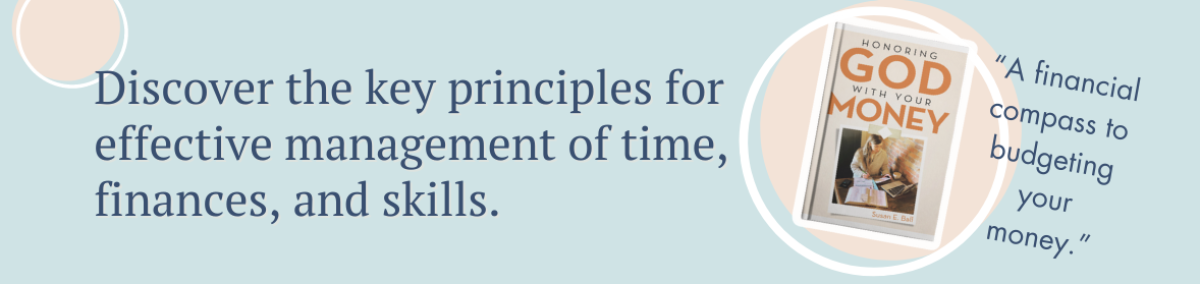
Please read my other blog posts for more ways to manage your money and reduce stress. My book, Honoring God with Your Money, is another valuable resource to help you manage your money.

 Susan's Reflections
You must be logged in to post a comment.