How to Manage Your Budget During Inflation

Do you feel like your money is not stretching as far as it did a few years ago? When you come home from the grocery store, do you feel like you have fewer bags of groceries, but your bill is the same or higher? At this stage in our lives, my husband shops for our groceries. Last week, he came home without some items I had written on our list. A few products were out of stock since the supply chain continues to struggle, and other items were priced higher than we felt was reasonable to pay. For example, my favorite salad dressing had doubled in price to $6 a bottle, and the sirloin I needed for pepper steak was more than $12 a pound. So, we found the salad dressing at a lower price at a different store and chose a recipe that used cheaper meat.

Despite the good news of a recent slowdown in the inflation rate, grocery prices continue to rise faster than the paycheck of the average American. Last week, the Bureau of Labor Statistics reported the inflation rate for June was 3.0%, the lowest rate in more than two years. Unfortunately, this 3% price increase since June 2022 is on top of the 9.1% increase from the previous twelve months, so most consumers are paying 12% more for the same goods than they were two years ago, while salaries have risen only about 9.5%.

Woman reviewing her shopping list

Grocery prices have risen more than the average consumer product. In fact, over the past two years, groceries have increased nearly 20%, requiring a more significant chunk of your budget.   Here’s an example:

  • In 2021, if you were making an “average” income of $57,000, you were taking home an average monthly check of $3,700.
  • The ideal food budget is 12% of your monthly take-home pay or $444.
  • If your income has increased only by an average of 9.5% to $62,415 and your take-home pay is now $4,051, then to buy the same “basket” of groceries today that you did in 2021, you would pay $533 per month.
  • Groceries are now consuming $533/$4051 = 13.2% of your budget.
  • A 1.2% increase might not seem like a big deal, but it will require you to cut $49 from other areas of your budget. It would be best to be mindful when shopping for the best deals on your non-food purchases.

Rent and fuel have also increased significantly. Rent has increased an average of about 15% over the past two years, and gasoline prices where I live have increased by about 17%. These increases are reducing the purchasing power of most Americans. Consumers are adjusting their spending and shopping habits to combat the impact of inflation.

Here are some tips to help you manage your budget as inflation grows faster than wages.

  • Check grocery ads to determine what is on sale and where to get the best prices before you plan your meals. Plan meals around what is available and affordable.Go to multiple grocery stores to get the best deals on the food you want.
  • Stick to your lists, and don’t be distracted by great deals on items you won’t use before they expire. Avoid extreme loyalty to particular brands. Be willing to try other brands and generic items to get better prices.
  • Combine grocery store trips with other errands to minimize gas consumption.
  • Use credit cards wisely if you use them for grocery and gasoline purchases. Always pay your balance in full each month. Use a card that gives you cash back. Sign up for monthly or quarterly “extra” cash-back bonuses. Make a grocery list and stick to it to avoid overspending often associated with using credit cards.
  • Research before making a purchase.  Use the Internet and digital tools to help you find the best prices for items you need. Google Shopping, Price.com, and other online portals will compare prices on various items to help you find the best deals. For an evaluation of some of these tools, see https://www.moneycrashers.com/best-price-comparison-shopping-engine-sites/ or https://influencermarketinghub.com/best-price-comparison-sites/
  • Shop through portals that give you cash back for shopping. Sign into a shopping portal and purchase from the companies they have relationships with. Receive a portion of the sale as cash back. The percentages are typically less than 10%. This option is similar to a discount, except you must wait for the cash back. These sites can be beneficial as they also search out the best prices. They are most helpful if you are not loyal to a particular brand and if you will buy the best deal rather than the brand-name item.

It seems as if the rapid inflation of the past two years is behind us, at least for the time being. However, it will take years for wages and salaries to catch up. Take this time to review your budget and make adjustments based on your current spending for food and other necessities. You may need to reduce discretionary spending until your earnings match the new price levels.

For other guidance on balancing your budget and managing your money, my book Honoring God with Your Money is an excellent resource. If you would like a free budget worksheet incorporating ideal spending guidelines, please email me at Susan.ball5@aol.com, and I will happily email them to you.

A Secret Method for Motivation to Save Money

Where are the holes in your budget? When people start to get serious about saving money, they will begin reigning in the expensive ticket items and carefully research the best price for those purchases. Watching a large amount of money leave your bank account can be painful, so an obvious way to save money is to compare the price of your options before committing to spending a large sum. If you need new furniture, you may research and find that new inventory hits the floor biannually, and stores discount last season’s items to make room in the showcase area. The research will result in hundreds of dollars in savings. 

However, an often overlooked part of a budget is the accumulated sum spent on your smaller ticket items. Shoppers tend to buy less expensive items on impulse without giving them much thought. Since a product is not expensive, you can justify tossing it in the cart and checking out. Over time, these purchases can be a hidden drain on your budget. They can also lead to regret when you realize the product is not worth as much as the money you spent on it.

Perspective: Let’s look at an example involving shoes. 

Suppose you are shopping for a new pair of shoes. Do you stop to take the time to consider if you need the shoes? The average price of shoes for women is $49. Regarding your budget, that might not seem like a bad price for a pair of shoes. But what if we put it in terms of how many hours you had to work to earn the shoes? 

According to the Bureau of Labor Statistics, the median wage for an American worker is currently about $57,000. A salaried worker with two weeks of paid vacation works 2,000 hours a year. Their hourly rate can be quickly estimated by dividing the yearly salary earned by 2. Therefore, we can calculate the average hourly wage rate at $28.50. (57,000/2=28.50) Of course, this is their gross salary. After deductions for tax withholdings, social security, and Medicare, the take-home pay would be about $22 per hour.

Therefore, an average person will work 2.2 hours to pay for an average-priced pair of shoes. A pair of heels could easily cost $150, which will require 6.8 hours of labor; a pair of Jimmy Choo’s can run $800 or more, consuming nearly a whole week’s work. 

Coffee is another possible area of your budget that you might not scrutinize. A woman spends, on average, $2,327 a year on coffee from a coffee shop. She will spend 105 hours working to pay for her coffee. When your daily habit is to drive-thru and grab a coffee without considering the cost, it can affect your budget’s bottom line. Even changing your order to a less expensive coffee can make a difference.  

A simple method to reduce impulse purchases is to ask yourself two questions:

1. Do I truly need this item?

2. Am I willing to trade ______ hour(s) of my labor to obtain this item?

So before purchasing something like the shoes mentioned in the example, you should ask yourself, “Am I willing to trade more than 2 hours (or 7 hours or 36 hours) of my time to own these shoes?”

The higher your wages, the fewer hours of labor it will take to make the same purchase. Conversely, if you make less than the median wage, you must work longer to buy a pair of shoes or whatever item you consider. A woman whose take-home income is $40 per hour will have to work a little more than an hour to buy an average pair of shoes, and she can buy a pair of Jimmy Choo’s for 20 hours of labor. A woman earning $15 an hour will take home about $11. She will have to work more than 4 hours for an average-priced pair of shoes and almost 14 hours for a dressy pair.

One pair of shoes will not break the budget but consider all the little purchases you might throw in the shopping cart, and it adds up. Use this new method of motivation to curtail your smaller impulse spending. 

Knowing your estimated hourly take-home pay lets you quickly calculate the hours you must work to make any purchase. It is a wise idea to take a few minutes to figure out the investment in labor to make the purchase and evaluate if this makes sense. It will save you from making many regrettable purchases. 

My book Honoring God with Your Money can provide you with more ideas on how to manage your money and achieve financial peace. My free quarterly newsletter is another great resource; click here to subscribe: newsletter

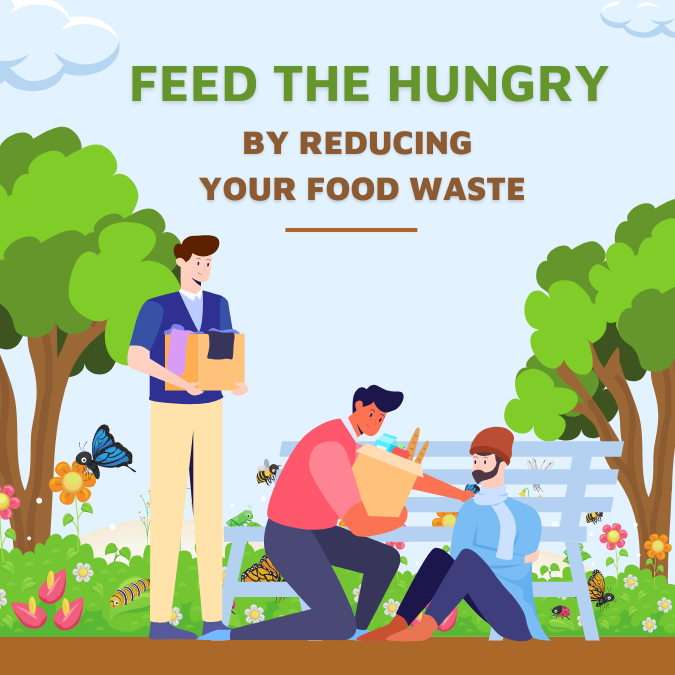
Feed the Hungry by Reducing Your Food Waste 

Can you relate to this phrase often told to a child 40 years ago at a dinner table? “You better clean your plate because there are starving children in Africa!” When I was young, my parents used to tell all 9 of us that phrase. It never made sense to me that cleaning my plate could impact whether other children were hungry. And, of course, if cleaning my plate results in me overeating, it will not benefit anyone and could harm me.  

Today, there are still hungry children. At least 1 in 6 children in the U. S. face food insecurity. Cleaning my plate still will not help those hungry children. On the other hand, if I reduce my food spending, I could donate money to one of the many organizations devoted to feeding the hungry.

Did you know the average American family throws away about $2,000 of food annually? In a society that feels the slowing down of the economy, it might feel like you have to pull back on your donations to non-profit organizations. However, if the average family could reduce waste and spend less, they could help feed hungry people. 

Consider challenging your family with these ideas for reducing waste and spending less on food expenditures: 

(1) eating smaller portions, 

(2) saving leftovers for second meals, 

(3) eliminating/reducing food waste by taking a bit more care in planning meals and using fresh food before the expiration date,

(4) allowing your children to participate in meal planning, shopping, and making to reduce the burden for you. 

These simple steps can help reduce food spending enough to make a difference in the lives of hungry Americans and others worldwide.

Here are some other motivational thoughts on helping you to reduce your spending on food and save to make donations:

For only $38 per month, you can sponsor a child through Feed the Children. Reducing your food waste by 23% would provide enough extra money to support a child. 

If you reduce your food waste by 30%, you will save $50 per month. A $50 donation to No Kid Hungry will provide up to 500 meals. 

A reduction of 15% would allow you to provide a gallon of milk for 15 families through Food for Others. For another 15% reduction, you could provide 20 families with a dozen eggs.

Volunteer at a local food bank when you turn in your donation. Your motivation increases when you see the impact it makes on the families in your community. 

Jesus encouraged us all to feed the hungry. “When the Son of Man comes in His glory, and all the holy angels with Him, then He will sit on the throne of His glory. All the nations will be gathered before Him, and He will separate them one from another, as a shepherd divides his sheep from the goats. And He will set the sheep on His right hand, but the goats on the left. Then the King will say to those on His right hand, ‘Come, you blessed of My Father, inherit the kingdom prepared for you from the foundation of the world: 35 for I was hungry and you gave Me food; I was thirsty and you gave Me drink; I was a stranger and you took Me in;  I was naked and you clothed Me; I was sick and you visited Me; I was in prison and you came to Me.'”  Matthew 25:31-36

If we all take steps to reduce our food wastes and expenditures, we can change make a meaningful difference in the lives of others and fulfill Jesus’s command to feed the hungry.

My book “Honoring God with Your Money” can provide you with many other ideas to reduce your expenses and manage your money. For other ideas on managing your money, please sign up for my quarterly newsletter: https://susaneball.us5.list-manage.com/subscribe?u=c4402ad22eed92a13b211a5ed&id=db5b79b8b5

Hope is Not a Plan

As a Christian, my hope is in the Lord, who holds my life in His hands. As a writer, I hope people buy my books and read my blogs. As the owner of short-term rental property, I hope that vacationers decide to stay at my home. But, as a small business consultant, I share with my clients the mantra, “Hope is not a plan.”

Hope is essential to taking risks and moving forward with new opportunities in your life. However, hope does not bring me readers or renters. I must take action to inform potential readers of my books and blogs and potential renters of my property. Those actions involve effort, such as marketing, advertising, and asking for reviews.

If you are trying to achieve a financial goal, hope will not help you to accomplish your goal. You need to have a plan:

  • If you want to purchase a new home or car, you need a plan to accumulate the down payment.
  • If you want to get out of debt, you need a plan to start paying off one debt while meeting the minimum obligations on your other debts.
  • If you would like to retire early, you need to start putting money into a retirement account at an early age and be consistent in making contributions.
  • If you want to improve your credit score, you need to obtain your credit report and assess what debts need to be paid off, what errors need to be corrected, and what steps you can take to reduce your total amount of debt.
  • If you want to start your own business, you must maintain a high credit score and set aside money to invest in your business.
  • If you want to start budgeting, you need to research and evaluate budgeting tools to determine which one you will actually use.

Key Factors of a Plan to Accomplish a Financial Goal:

  1. Live below your means. If you want to save money for any reason, or if you’re going to pay down debt, you must spend less than you make. This requires you to know what you spend and evaluate where to make cuts.
  2. Write down your goals. Studies show that writing down your goals significantly increases your chances of achieving them.
  3. Have an accountability partner. If you are married, you and your spouse should hold each other mutually accountable. If you are unmarried, ask a friend to be your accountability partner. Hold each other accountable by encouraging each other and reminding yourselves that money spent cannot be used to meet your goal.
  4. Celebrate milestones. Give yourself a pat on the back when you hit an intermediate milestone, such as paying off a debt or saving a certain amount of money. Milestone celebrations should be free or low-cost to keep you on track to achieve your goal.
  5. Make it easy to save. Set up payroll deductions for retirement or other savings so you never have access to the money. Download a budgeting tool that makes it easy for you to track your spending. Avoid “window shopping,” which increases your desire for items you do not really need.
  6. Keep your goal in front of you. Have a picture of your dream home or car on your refrigerator. Write your business plan and look around for possible locations. Develop a bucket list of all the fun things you will do in retirement.
  7. Evaluate your progress periodically, and if you have gotten off track, take action to correct your mistakes and get back on the right track.

Your plan does not have to be complicated to be effective. Start dreaming, set a goal, and develop a plan to reach that goal.

Setting and achieving financial goals helps you honor God in how you use and manage the financial resources He has entrusted to you. It also allows you to build treasure in Heaven. For more tips to help you manage your financial resources, please see my other blogs in the Finance tab. My book, Honoring God with Your Money, is full of guidelines to help you use money in a way that builds true wealth.

If you have never accepted Christ as your Savior, please consider accepting the free gift of salvation from your sins and eternal life in Heaven. It will pay dividends for all of eternity.

Minimizing the Costs of Credit Card Balances

Americans have a love affair with credit cards. They make life easier while also making it easier to overspend. Studies reveal that a purchaser will spend an average of 20% more on an item when using a credit card than when paying with cash.

Person using a laptop computer and holding a credit card.  Title is "Minimizing the Costs of Credit Card Balances."

Credit card usage peaked in the fourth quarter of 2008, as the nation entered a severe recession, with balances reaching a then-high of $866 billion. Credit card balances fell significantly over the next 5 years. As the economy recovered, however, the use of credit cards and credit card balances began to rise. Today, credit card balances are approaching the $1 trillion level. The average consumer carries a credit card balance of $7,279 (Lendingtree.com). Fifty-three percent of credit cards being actively used are not paid off in full each month. The average interest rate of these balances is 20.92%, and the average interest rate being offered to new borrowers is 23.65%. 

The good news is that most Americans make regular credit card payments, and only 2.25% of credit card balances are delinquent by 30 days or more.

The minimum credit card payment is typically about 2% of the balance. On the average balance of $7,279, the minimum payment would be $86. At that payment and an interest rate of 20.92%, it would take a borrower 28 years and 3 months to pay off the debt. The total interest paid would be $27,776. In this scenario, the $7,279 in debt would cost the borrower $35,055.

When a consumer (that’s you) begins to take an active role in their financial future, they can minimize the interest on credit card balances. Remember, interest is handing part of your hard-earned paycheck to someone loaning you money. If you are not paying off your credit card each month, you need to determine why you carry a balance. 

The steps below can help you make advances on getting a handle on your credit card debt: 

  1. Always pay at least the minimum balance on time.
  2. Set up automatic payments to ensure that payments are always made on time.
  3. Pay more than the minimum balance whenever possible.
  4. Consider the actual cost of debt before making large purchases on credit cards.
  5. If your balances are on multiple credit cards, prioritize paying off the card with the highest interest rate first.
  6. Live below your means so that you will have some money each month to put toward your credit card balances.
  7. Create a budget to live within your means. (Refer to my past posts on budgeting) 

To learn more about how to manage your money and pay off debt, please click the Finances categories tab to find many blogs on money management, budgeting, and stewardship. My book Honoring God with Your Money is a great tool for financial money management.

If you would like to receive my quarterly newsletter on managing your money, please complete the short form: newsletter signup.

How to Create a Personalized Budget – “One-Size Does Not Fit All”

Do you find that you run low or out of money before the next paycheck arrives? Is your credit card full of charges that never fully get paid off, and you wish for a month with no unexpected expenses so that you can have a chance to get caught up? If you are not budgeting and planning your income, this is probably a familiar situation for you.

Budgeting Pie Chart

Many people try to create a budget a few times a year and some even stick to it, while many others find it difficult. Maybe you have even tried and found that you could not make it work. That’s because “ideal” budget percentages are based on the “average” person or family, and you are not “average.” You are a unique person, or family, with your own needs and priorities. You need to create a budget that works for you. Before we look at some tips to help you create a budget you can live with, let’s look at an ideal budget for an average household.

The median household income across America is currently $69,000. It consists of 2. 6 people—typically two adults and one child. The table below shows the “ideal” percentages that should be spent for each of the major spending categories, along with the annual and monthly amounts for each category.

Spending CategoriesPercentagesAnnual
Amount
Monthly
Amount
Housing (rent or mortgage, utilities, internet, homeowners/renters insurance, phone, cable)36%$24,840$2,070
Food (groceries and eating out)12%$8,280$690
Automobiles (car pymt, gas, insurance, maintenance and repairs12%$8,280$690
Medical (insurance and bills)5%$3,450$287.50
Clothing5%$3,450$287.50
Entertainment5%$3,450$287.50
Life Insurance5%$3,450$287.50
Savings5%$3,450$287.50
Debt Reduction5%$3,450$287.50
Miscellaneous10%$6,900$575

At first glance these numbers might look doable, and depending on where you live, maybe these are very realistic numbers.  However, where I live, it is hard to keep monthly housing costs to $2,070.  The average monthly rent for a one-bedroom apartment is $1,750.  That leaves $320 for utilities, internet, insurance, phone, and cable.  A careful consumer might be able to manage that.  However, an average family needs more than one bedroom, making it harder to stay within the budget for housing.  Automobile expenses are also challenging.  Currently, the average new car payment is $719, and the average payment for a used car is $527.  When you add in fuel, insurance, and repairs and maintenance, you will almost certainly exceed the $690 budgeted amount.

In order to create a budget that works for your household and one that you can stick with, you will have to make some difficult choices. 

Use these guidelines to help you make the decisions which are best for you and your family.

  1. Determine your needs based on the number of people in your family and your career.
    a. The more people in your family, the larger the home and vehicle you need.
    b. Each person requires food, clothing, and health care, so larger families need to allocate more money to those items.
    c. If your job requires professional or business attire, you will need to allocate more money for clothing.
    d. If you are required to drive your car for work, you will need a newer, reliable vehicle.
    e. Does your household require more than one vehicle for multiple drivers?
    f. Do you need to allocate money for childcare while you are working?
  2. Determine your priorities.
    a. Do you want each child to have their own bedroom, or can children share bedrooms?
    b. Do you want to have a short commute to work?
    c. Do you want to live in a specific community? Or a community with specific amenities?
    d. Is it important to you to have a new car every few years?
    e. Do you want your children to attend a specific school? Do you want them in a private school which will require you to pay tuition?
  3. Consider the alternatives.
    a. You may be able to afford a larger home if you are willing to commute farther to work.
    b. You may be able to live closer to work or in your preferred community, if you are willing to forgo a desired bedroom or other amenity, such as a den, garage, or extra bathroom.
    c. You may have access to safe, reliable public transportation, allowing you to forgo vehicle ownership.
    d. You may be able to continue to drive an older car by engaging in ride sharing to work and renting a car for longer trips.
    e. You can save money on food by packing lunches and cooking most meals at home.
    f. You can save money on recreation by taking advantage of free sources of entertainment and recreation.
    g. If you are single or a single parent, you could save money on housing by sharing a home or renting out a spare bedroom to a tenant.
    h. You may be able to telework full-time, or several days a week, which will reduce fuel expenses and perhaps childcare expenses.
  4. Use the “ideal” budget percentages to create a base budget. Use these budget numbers to help you see the areas in which you are overspending and underspending. Then, adjust your budget based on your current expenses and your needs.
  5. Refine your budget based on your priorities.
  6. If your expenses exceed your income, you must make additional adjustments. Consider the alternatives and make decisions based on which alternatives will best meet your needs and come closest to meeting your priorities

Creating a budget is not an easy task, but it is an important one.   It will allow you to meet the needs of your family and relieve much of the stress you are currently facing.

To learn more about how to honor God with your money and build treasure in Heaven, please click the Finances categories tab to find many blogs on money management, budgeting, and stewardship. My book Honoring God with Your Money is a great tool for financial money management.

Methods for Tracking Spending

Have you overdrawn your bank account recently?  Are you running up balances on your credit cards because you don’t have enough money to cover your monthly expenses? Do you find yourself wondering where all your money went? Do you want to save money for a memorable trip, yet find your savings balance decreasing rather than increasing?    If you answered yes to any of these questions, you need to create a budget and set financial goals.

Creating and sticking to a budget will allow you to stay out of debt and achieve your financial goals.  However, you need to know where your money is going before you can create a budget that will work for you. Start by tracking your spending for a few months.

Cell phone with spending app open

In times past, most people tracked their spending using a notepad and pen. I recently found a spiral notebook that my grandmother used to record her spending in 1956. She used a separate page for each month. She listed her take home income at the top of the page and carefully noted each expense. As a single woman, she brought home about $275 each month, so it was imperative that she managed her money well. This method still works well if you faithfully write down all your expenditures.

I am a big fan of spreadsheets. When my husband and I started our own home twenty-five years later, I used a pen and paper method, too. But, a few years later, when Lotus 1-2-3 (precursor of Excel) was introduced, I graduated to using a spreadsheet to track income. Today, I use Quicken to track and balance my bank accounts, and I use a spreadsheet to develop our budget. I balance my checkbook every week or two to be aware of my spending and how much money is in my accounts.

Other people use different methods. I have friends who use the envelope system. On each pay day, they cash their checks, put their budgeted savings into their savings account, and allocate the rest toward expenses. The money for each expense category goes went into a separate envelope. They pay cash for all expenses, and when the envelope is out of cash, they spend no more on that category for the remainder of the money.

Today there are many apps to help you track your spending. Some can be connected to your bank accounts and credit cards. Some apps simply track your spending, while others allow you to input spending parameters and are indeed budgeting tools. Apps benefit those who do not balance their checking accounts regularly. According to StatisticBrain.com, 79% of people rarely or never balance their checking accounts.

Some of the most popular spending apps currently are:

  1. Mint. This free app can sync to your bank accounts and credit cards. It allows you to set goals, track investments, and be reminded of when to pay bills. It will also alert you when you have exceeded your spending goals.
  2. YNAB (You Need a Budget)–This zero-based budgeting system lets users allocate all income into spending categories, debt reduction, and savings. It also lets users set goals. The downside is that after the free 34-day trial ends, you must enroll and pay a monthly or annual fee.
  3. Goodbudget. This system mimics the envelope method. The user assigns an amount to each “envelope.” This method does not connect to bank accounts or credit cards, so the amounts must be entered manually. This is a good version for those who do not want all of their accounts connected. There is a free version, but if you want to track more than a few categories, you may need to pay a fee.
  4. Every Dollar. This method is similar to my method of recording expenses in Quicken and using a spreadsheet to track totals. Like Goodbudget, it does not connect to bank accounts or credit cards. All expenses must be entered manually. It does allow the user to set reminders to pay a bill.

There are many other apps available that you might want to consider. Choose a method based on compatibility with your style and personality. Mint or YNAB might be a good choice if you want to connect all your accounts without entering expenditures manually. On the other hand, these systems may not be suitable for you if you worry about identity theft and the risks of having things too automatic. So, set aside a few hours to evaluate the options available and decide to start using one of them to track your expenditures.

If you need help to learn to manage your money and improve your credit, please check out some of my other blogs on Finances, Money Management, and Stewardship. My book Honoring God with Your Money is a great tool for financial money management.

For more money management tips, subscribe to my quarterly newsletter: newsletter signup